

If the customer previously used slide switches and now wants to replace them with rotary DIP switches, it may require the customer to modify the PCB layout. Slide switches allow customers to adjust each position according to their needs. For example, if a customer wants to control 4 functions or 8 functions, they can choose a 4-position or 8-position switch based on their requirements. The encoding method is relatively simple, as each position adjustment only toggles the corresponding two pins on or off.The drawback of DIP switches is that if the customer wants to control more functions, the number of positions required increases, which means the slide switch occupies more PCB space. Below is the circuit design diagram for a DIP switch:

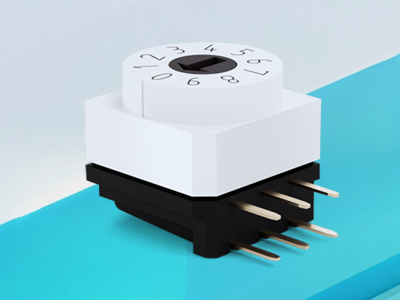
A rotary DIP switch allows customers to design their PCB layout according to its encoding method, with the most commonly used being the BCD binary encoding method (R code, or natural code). Regardless of how many positions the customer chooses, the switch occupies the same amount of PCB space. I recommend two types of rotary shafts: D-flat and S-high, and offer 10-position and 16-position rotary DIP switches.


The 16-speed rotary DlP switch is available in the following packages:1.Side-Ope












 Return to List


