

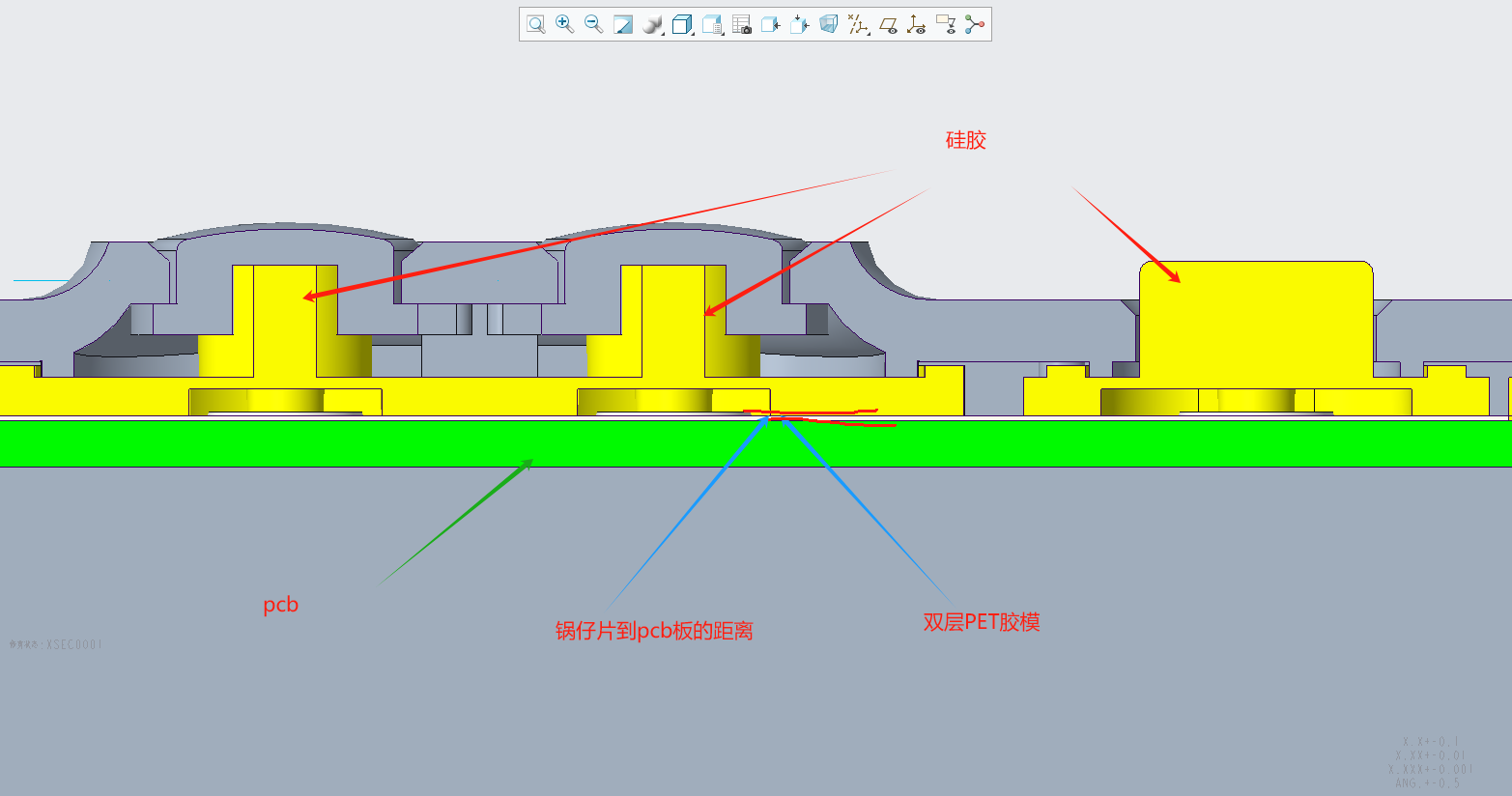
When designing a PCB board and product structure, selecting the right Metal Dome is crucial for ensuring product performance and user experience. Here are the key points to consider:
1. Determine Application Requirements:
- Application Environment: Identify the usage scenario of the Metal Dome, such as mobile phone buttons, remote controls, etc.
- Space Constraints: Determine the installation space dimensions to choose the appropriate diameter and thickness of the Metal Dome.
2. Select Appropriate Size and Shape:
- Size: Choose the suitable diameter based on space constraints and tactile feel requirements. Common diameters include 3mm, 4mm, 5mm, 6mm, 8mm, 8.4mm, 8.5mm, and 12.2mm. Thickness typically ranges from 0.05mm to 0.25mm.
- Shape: Select the shape based on key layout and tactile feedback. Common shapes include round, cross, triangle, square, and ellipse (waist-shaped).
3. Choose Appropriate Material and Surface Treatment:
- Material: Common materials include stainless steel and nickel-silver alloy, considering conductivity, elasticity, and durability.
- Surface Treatment: Choose surface treatments like gold plating or silver plating to enhance conductivity and durability.
4. Determine Actuation Force and Travel Distance:
- Actuation Force: The force typically ranges from 80g to 1000g. Choose based on the required tactile feedback.
- Travel Distance: The travel distance usually ranges from 0.1mm to 0.5mm. Ensure the feedback and tactile feel are appropriate.
5. Ensure Durability and Reliability:
- Durability Testing: Metal Domes should undergo extensive actuation testing, typically required to withstand tens of thousands to millions of actuations.
- Environmental Adaptability: Consider the performance under various temperature, humidity, and other environmental conditions to ensure stability and reliability.
6. Meet Electrical Performance Requirements:
- Conductivity: Ensure the Metal Dome meets the electrical design requirements for conductivity.
- Contact Resistance: Test the contact resistance to ensure it remains within a low resistance range.
7. Select Proper Installation Method and Match PCB Design:
- Mounting Method: Choose suitable mounting methods such as adhesive tapes or conductive adhesives to ensure secure installation.
- PCB Design: When designing the PCB, reserve appropriate spaces and mounting holes for the Metal Domes.
8. Conduct Testing and Optimization:
- Initial Testing: Conduct sample testing based on the initial selection, including actuation force, travel distance, tactile feedback, and durability.
- Feedback and Adjustment: Adjust design parameters based on test results and user feedback.
- Iterative Validation: Perform multiple rounds of testing and optimization to ensure the Metal Domes meet all performance requirements.
9. Final Confirmation and Mass Production:
- Confirm Design: Finalize the design after all tests and adjustments.
- Production Validation: Conduct small-batch production tests to validate manufacturing processes and quality control, ensuring consistency and reliability in mass production.
By following these steps and considerations, you can select the most suitable Metal Dome for your PCB board and product structure, ensuring excellent user experience and reliable performance.
How to Choose a Metal Dome to Design PCB Board and Product Structure
Selecting the Right Tactile Metal Dome for Your Application

Discover how metal dome switches work. This guide explains their snap-action principle, tactile response, and long lifespan, making them ideal for AI products, ...











 Return to List


