

1. Lack of conductive mechanism: The raised panel typically lacks a direct contact with the center point of the dome switch, resulting in an inability to trigger the button properly.
2. Surface irregularities: The uneven surface of the raised panel leads to inconsistent contact between the key overlay and the surface, affecting tactile feedback and stability.
3. Inconsistent triggering points: The raised panel may cause variations in the triggering points of the buttons, reducing their consistency and predictability.
4. Reduced durability: Prolonged use may lead to deformation and uneven pressure on the raised panel, potentially causing damage or wear to the dome switch overlay, thus reducing the device's durability and reliability.
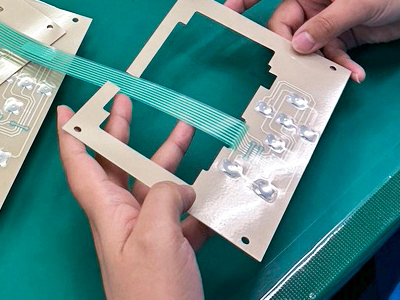
5. Increased overlay thickness: Adding a layer ofblack PET metal-dome-arrays or white PET metal-dome-arrays at the center of the dome switch overlay increases the height of the buttons, ensuring more uniform actuation of the dome switch, thus enhancing overall structural precision.

Discover how metal dome switches work. This guide explains their snap-action principle, tactile response, and long lifespan, making them ideal for AI products, ...












 Return to List


